Most dog owners believe one of two things about dog poop in their yard: that it eventually breaks down on its own, or that it acts as a natural fertilizer for the grass. Neither is true. And the reality is a lot more important than most people realise.
If you've ever wondered, "is dog poop bad for your lawn?", the short answer is absolutely yes. But the long answer reveals a chain reaction of lawn damage and hidden health risks that affect your family, your pets, and your entire neighbourhood.
The Fertilizer Myth: Why Dog Poop Is Not Good for Your Lawn
It is easy to see why people believe dog poop acts as a fertilizer. After all, cow manure has been used by farmers to fertilize crops for centuries. But comparing cow manure to dog waste is like comparing apples to battery acid.
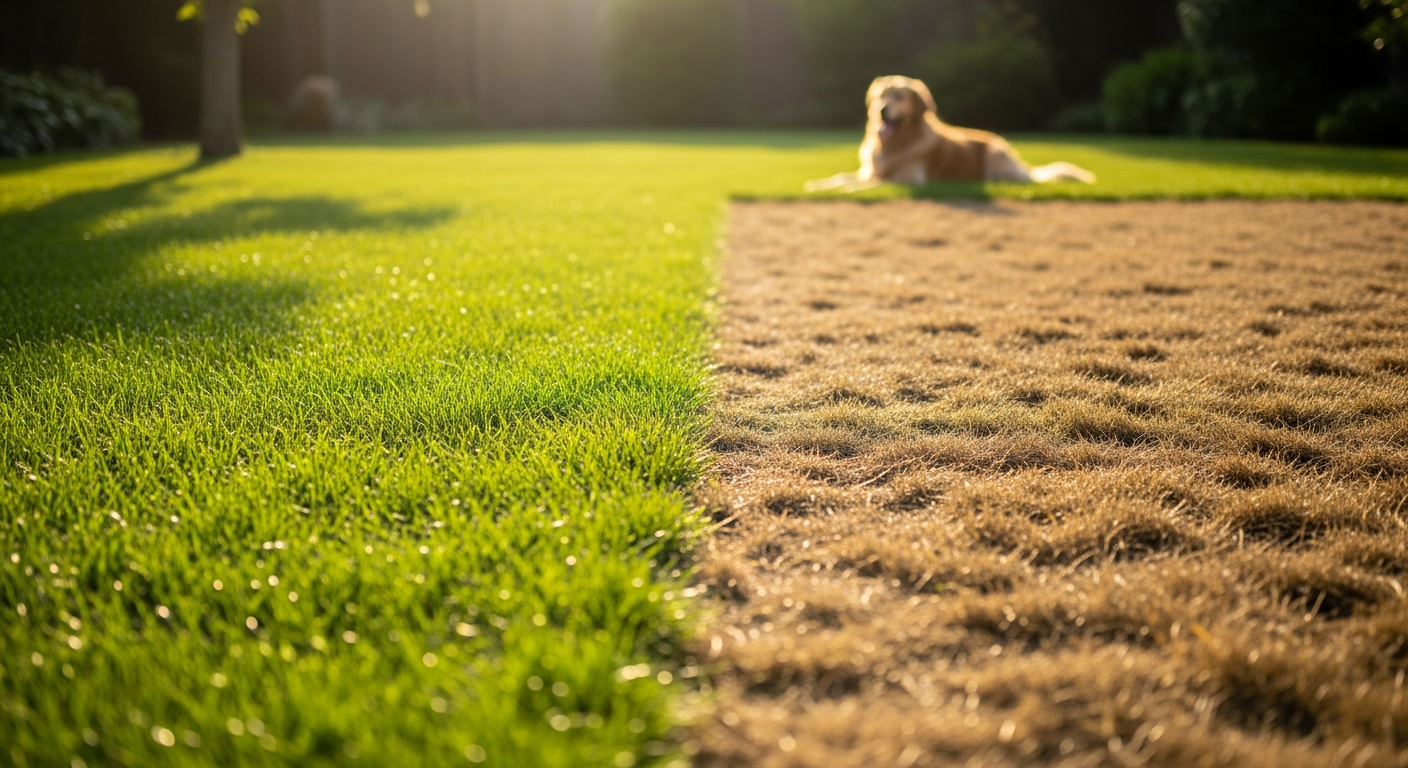
The difference lies entirely in the diet. Cows are herbivores, eating a diet rich in plant matter which produces low-acidity waste that breaks down easily. Dogs are carnivores (or omnivores with a heavily meat-based diet). Their high-protein diet creates highly acidic waste rich in nitrogen and phosphorus. Instead of feeding your grass, this concentrated acidity burns and kills it, creating those familiar brown dead patches that spread across your yard.
🐄 Cow Manure
- ✓ Herbivore diet, low acidity
- ✓ Breaks down as natural fertilizer
- ✓ Used safely by farmers for centuries
🐕 Dog Waste
- ✗ Carnivore diet, highly acidic
- ✗ Burns and kills grass on contact
- ✗ Spreads harmful bacteria and parasites
What Dog Poop Actually Does to Your Yard Over Time
When left untouched, dog poop lawn damage is a slow, compounding problem. Depending on your climate and the dog's diet, a single pile of waste can take up to a year to fully decompose.
During that time, the high nitrogen content continues to burn the grass underneath and surrounding the pile. As it slowly breaks down, rain washes the concentrated acidity deeper into the soil, making it increasingly difficult for new grass to grow in that spot even after the waste is finally gone.
Add to this the smell problem that intensifies dramatically in warm weather, and the fact that lingering waste attracts flies, insects, and other pests to your yard, and the case for prompt removal becomes clear.
The average dog produces more than 274 pounds of waste per year. Left unmanaged, that is a massive amount of acidity and bacteria concentrated in your backyard.
The Health Risks You Cannot See
The visible damage to your lawn is frustrating, but the invisible dog waste in yard dangers are far more concerning. Dog waste is a primary vector for harmful bacteria and parasites.
For your children
Children playing in contaminated grass are at the highest risk. They frequently touch the ground, their toys, and their faces. Even if you have removed the visible waste, harmful organisms survive on the ground and in the soil for months, easily transferring to hands, shoes, and skin without anyone knowing it.
For other pets
Dogs love to sniff, and sometimes step in, areas where other dogs have relieved themselves. This is exactly how bacteria and parasites spread between animals. Parasites like roundworm, hookworm, and Giardia survive in the soil and can infect your pets long after the original waste is gone.
For your neighbourhood
The problem does not stay contained in your backyard. Rainwater washes decaying dog waste directly into storm drains. This runoff carries bacteria straight into local waterways, rivers, and lakes. The environmental contamination caused by uncollected pet waste extends well beyond your own property lines.
⚠️ What Lives in Dog Waste
- E. coli: Causes severe gastrointestinal illness in humans.
- Salmonella: Highly transmissible to humans and other pets.
- Roundworm eggs: Can survive in soil for up to 2 years.
- Hookworm: Larvae can penetrate human skin on contact.
- Giardia: Spreads rapidly between animals and humans through contaminated soil.
"Dog waste is not just unpleasant. It is classified as a pollutant by the Environmental Protection Agency. The good news is it is one of the easiest environmental problems any dog owner can fix."
How Often Should You Pick Up Dog Poop?
If you are wondering how often to pick up dog poop, the answer is: as often as possible. Ideally, waste should be removed within 24 to 48 hours. Waiting longer allows the acidity to burn the grass and gives bacteria time to seep into the soil, multiplying the health risks exponentially.
| Number of Dogs | Recommended Frequency |
|---|---|
| 1 dog | Clean up every other day at minimum |
| 2 dogs | Daily pickup highly recommended |
| 3 or more dogs | Daily pickup is non-negotiable |
💡 The Rule of Thumb
If you can smell your yard before you open the back door, you are already behind. Pick up after your dog within 24 hours whenever possible.
The Honest Case for Professional Pet Waste Removal
Let's be honest: nobody enjoys picking up dog poop. It is the worst part of dog ownership. This is why a professional pet waste removal service is rapidly becoming as common as hiring a landscaper or a house cleaner.
When you calculate the minutes spent every week walking the yard with a bag, it adds up to hours of your life every month. More importantly, it solves the consistency problem. Most people mean to do it daily, but life gets busy, it rains, and suddenly you are staring at a yard full of landmines. A professional service ensures the job is done consistently, using proper sanitary disposal methods, giving you total peace of mind—especially if you have young children or multiple dogs.
What to Look for in a Pet Waste Removal Service
If you decide to outsource this chore, make sure you hire a reputable local professional. Here is a quick checklist to evaluate a service:
- ✅ Licensed and insured
- ✅ Uses sanitary disposal methods not just bagging
- ✅ Offers consistent scheduling: weekly or biweekly
- ✅ Covers your full yard including corners and hidden areas
- ✅ Sends a confirmation or photo after each visit
- ✅ Transparent pricing with no hidden fees
Browse verified pet waste removal professionals in your area
At the end of the day, you love your dog, your yard, and your family. A little consistency with waste pickup protects all three without much effort. Whether you commit to a daily scoop yourself or hire a professional to handle it for you, the most important thing is that it gets done.
Your grass will be greener, your shoes will be cleaner, and your backyard will go back to being a place of relaxation instead of a minefield.
Find a Pet Waste Removal Pro Near You
Save time, protect your lawn, and keep your family safe. Browse verified pet waste removal professionals near you.